Understanding Ireland’s Role in Global Trade
In this blog post, we delve into Ireland’s integral role in global trade, examining its economic landscape and sectors contributing to its international standing. As a country with a rich history and strategic location, Ireland has positioned itself as a global trading hub. This article explores key facets of Ireland’s trade dynamics, including the diverse services sector, labor and taxation policies, and its extensive transportation and telecommunications infrastructures. By understanding these components, one can grasp Ireland’s influence and significance in the intricate web of global trade. Read on to discover how Ireland remains competitive and continues to thrive in the ever-evolving global marketplace.
Trade of Ireland
Ireland’s trade sector is central to its economy, characterized by a high degree of openness and significant international ties. The nation benefits from its geographic positioning, acting as a bridge between Europe and North America. This strategic location amplifies its relevance in global trade markets, facilitating transatlantic commerce and collaboration.
Major exports include pharmaceuticals, organic chemicals, and electronic machinery, with the United States, Belgium, and the United Kingdom being vital trading partners. Ireland’s adeptness in forming robust trade agreements with various countries has fortified its position in global commerce, sustaining a steady growth trajectory.
Services
The Irish services sector is a cornerstone of its economy, particularly in finance, business, and information technology. With an emphasis on innovation and tech-savvy development, Ireland has emerged as a hub for software development, data analytics, and cloud computing services. This evolution has not only created job opportunities but also attracted foreign investment.
Financial services in Ireland boast resilience and sophistication, with Dublin being a well-regarded global financial center. The sector encompasses a broad range of activities, including banking, insurance, and asset management, contributing substantially to Ireland’s GDP and global trade engagements.
Labour and taxation
Ireland’s labor market is dynamic, characterized by a highly skilled workforce that supports its burgeoning technology and innovation sectors. The government fosters a supportive environment through education policies aimed at skill development, ensuring the workforce remains competitive in a global context.
Taxation is another critical factor influencing Ireland’s trade. The corporate tax rate, among the lowest in Europe, has been a decisive element in attracting multinational enterprises. This favorable taxation landscape has catalyzed foreign direct investment, bolstering Ireland’s economic growth and integration into global trade networks.
Transportation and telecommunications
Efficient transportation systems underpin Ireland’s trade capabilities, facilitating the smooth movement of goods and services across borders. The combination of road, rail, air, and maritime networks ensures comprehensive logistical support essential for international trade activities.
Telecommunications infrastructure complements this by underpinning digital connectivity and enabling businesses to operate seamlessly within the global market. The proliferation of high-speed broadband and robust mobile networks has been vital in supporting the technological and service sectors, further cementing Ireland’s role in global trade.
Roads and railways
Ireland’s extensive road network is pivotal to its economic infrastructure, supporting commerce by linking urban centers with ports and airports. Continued investment in road improvements ensures that logistical operations remain smooth, enhancing Ireland’s trade efficiency.
Similarly, railways offer reliable transport for freight and passengers. Though historically more centered on passenger travel, recent initiatives aim to optimize freight services, recognizing the potential of rail transport in complementing road logistics, reducing environmental impact, and facilitating sustainable trade practices.
Waterborne traffic
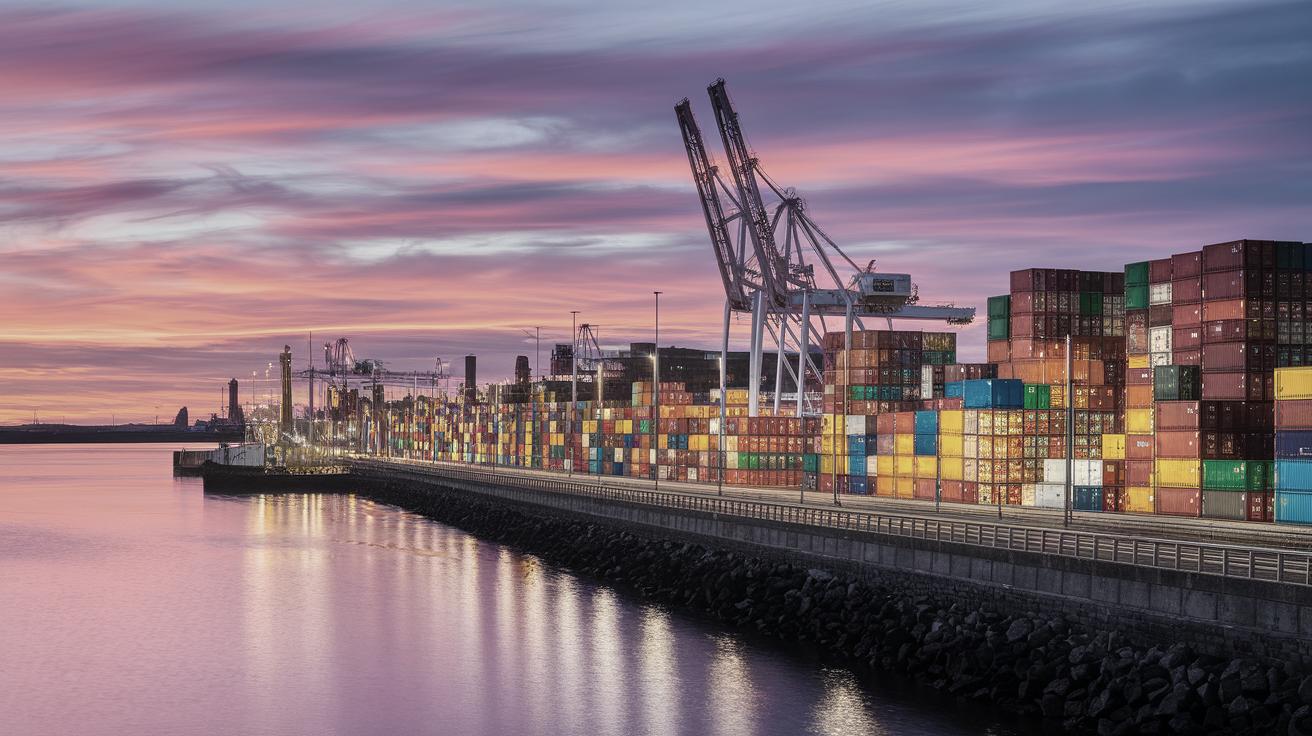
As an island nation, Ireland’s ports are lifelines of trade, handling a significant proportion of import and export processes. The ports of Dublin, Shannon Foynes, and Cork serve as primary gateways for global trade, with diverse capabilities catering to containerized, bulk, and general cargo.
Strategic enhancements in port facilities support increased traffic and larger vessels, ensuring Ireland remains competitive in maritime trade. These advancements are crucial for maintaining efficiency and fulfilling international shipping standards, pivotal for Ireland’s stature in global trade routes.
Air facilities
Ireland’s air transport infrastructure is instrumental in linking it to global markets. With Dublin Airport as the principal international gateway, Ireland maintains robust flight connections worldwide. The presence of a well-connected air network aids in the transportation of high-value, time-sensitive goods, crucial to sectors like pharmaceuticals and tech.
Air cargo services complement passenger flights, enhancing trade capabilities and providing flexibility. The continued expansion and modernization of airport facilities ensure that Ireland meets evolving global aviation demands, further solidifying its position as a nexus in international air logistics.
Telecommunications
The telecommunications sector in Ireland has seen exponential growth, evolving to meet the demands of a digital economy. Investments in broadband infrastructure and mobile networks have been significant, enabling seamless communication and supporting the robust services sector fundamental to international trade.
Connectivity is integral to Ireland’s economic strategy, encouraging innovation and efficiency across industries. This digital connectivity fosters trade relationships and ensures that businesses can compete on a global scale, leveraging the rapid transmission of information and technological advancements.
Summary of Main Points
| Aspect | Key Points |
|---|---|
| Trade of Ireland | Strategic location enhances trade; major exports include pharmaceuticals and electronics. |
| Services | Key sector includes finance and tech; high foreign investment attraction. |
| Labour and Taxation | Skilled workforce and favorable tax policies attract multinational enterprises. |
| Transportation and Telecommunications | Integrated transport systems support trade; telecommunications enable global operations. |
| Roads and Railways | Strong infrastructure supports commerce; initiatives improve freight logistics. |
| Waterborne Traffic | Key ports handle significant trade; advancements enhance global competitiveness. |
| Air Facilities | Comprehensive air network supports international trade; includes high-value goods transport. |
| Telecommunications | Growth in infrastructure supports digital economy; vital for global trade success. |